Pan‑Roasted Lamb Leg Steak with Butter‑Confit Carrots, Charred Brussels & Proper Gravy
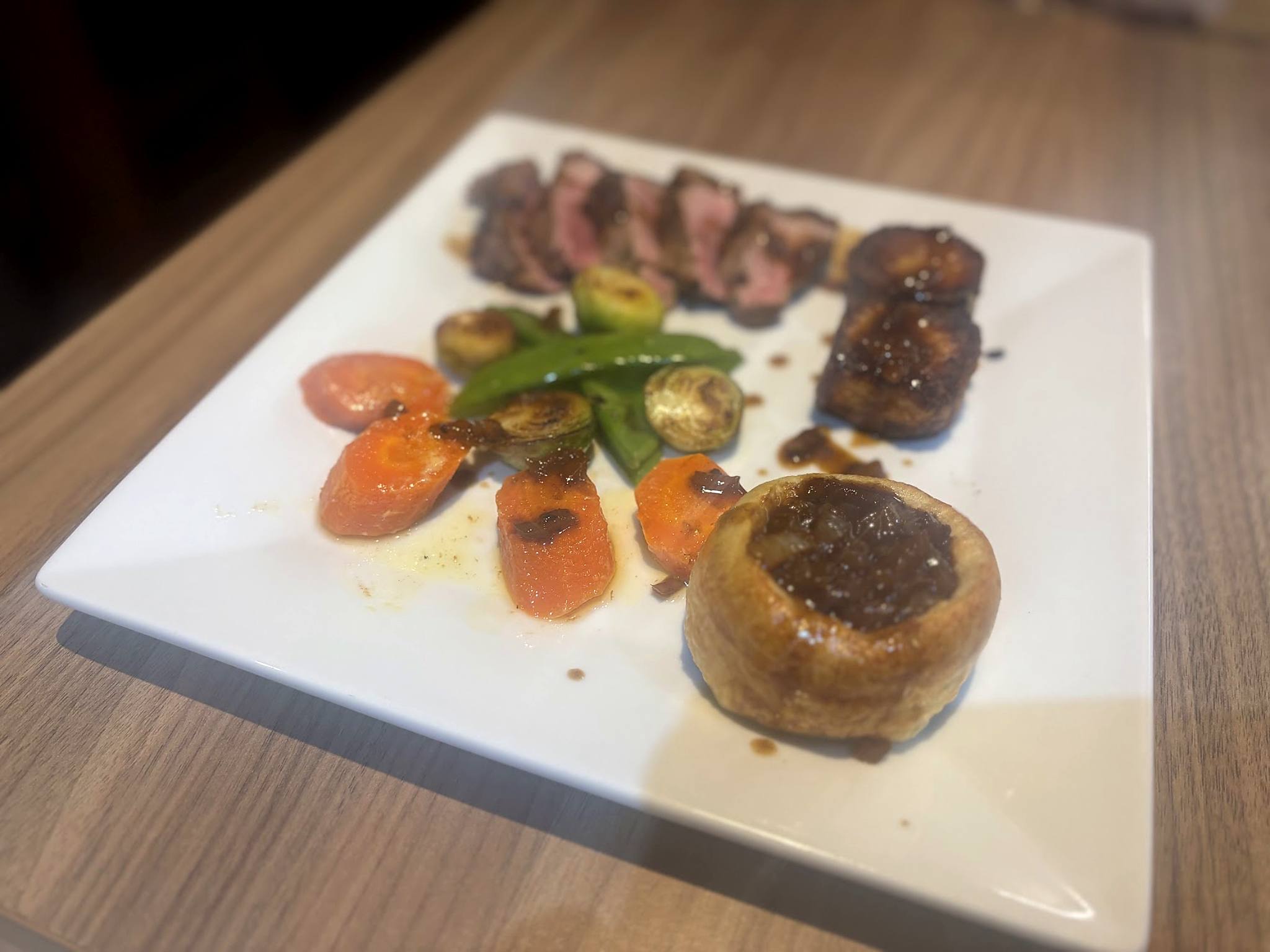
How this one runs
- Low stress, high payoff. Long, gentle confit first; fast, confident cooking at the end.
- Carrots are deliberately cooked early to create time and headroom.
- Lamb is treated like a steak, not a roast.
- Gravy is built from reduction and gelatin, not flour.
- I have to be honest. When I made this, I cheated and bought some part baked Yorkshire puddings. I would have made my own had I been less lazy. Next time eh.
Ingredients
| Qty | Ingredient | Notes |
|---|---|---|
| 1 | Boneless lamb leg steak | Thick fat cap preferred |
| 4–5 | Carrots | Peeled, halved or cut into batons |
| 60–80 g | Butter | For confit + gravy finish |
| 2 pods | Green cardamom | Lightly cracked |
| 1 sprig | Thyme | Carrots |
| 200–300 g | Potatoes | Roasties |
| Handful | Brussels sprouts | Trimmed, halved |
| Handful | Mange tout | Whole |
| 1 | Yorkshire pudding | Pre‑made, oven‑baked |
| 200–300 ml | Chicken stock | Gelatin‑rich if possible |
| ½ | Onion or 1 shallot | Finely chopped |
| 1 clove | Garlic | Crushed |
| 1 sprig | Rosemary | Lamb |
| As needed | Goose fat / tallow / chicken fat | Roast potatoes & greens |
| ½ tsp | White wine vinegar | Greens finish |
Method (timed)
Start the stopwatch now.
-
T+00:00Butter‑confit the carrots
Place carrots, cold butter, cardamom pods, thyme and a pinch of salt into a cold saucepan. Cover carrots almost completely. Lay a cartouche directly on top and set the pan over the lowest heat. (To make a cartouche: cut a circle of baking paper roughly the size of the pan, scrunch it under the tap, flatten it back out, then place it directly on the carrots so they stay submerged.)
Why?
Confit is about time and gentle heat, not temperature. Starting cold allows the butter to melt gradually, infusing flavour without frying or splitting. The cartouche prevents evaporation and keeps the carrots submerged for even cooking.
-
T+45:00Prepare roast potatoes
Parboil potatoes until edges soften. Drain, steam dry, rough up, then toss with a mix of goose fat, tallow and chicken fat. Roast at 220°C fan until deeply golden, turning once.
Why?
Roughing creates surface area for crisping. Mixing fats combines high smoke point with flavour. Space and heat matter more than seasoning at this stage.
-
T+75:00Finish and hold carrots
When a knife slides through easily, remove carrots from heat. Leave covered in butter until serving.
Why?
Confit vegetables hold exceptionally well. Taking them off early creates slack later and avoids rushing when multiple elements need attention.
-
T+90:00Pan‑roast the lamb
Place lamb fat‑side down in a cold pan. Bring to medium heat and render slowly (this may take 6–8 minutes depending on thickness) until the fat is golden and translucent. Turn, add butter, garlic and rosemary, and baste for 2–3 minutes per side. Rest uncovered.
Why?
Lamb leg steak behaves like a steak, not a roast. Rendering the fat gently prevents chewiness. Overcooking collagen at this thickness makes meat woolly rather than tender.
-
T+98:00Build the gravy
Pour off excess lamb fat, leaving a spoonful. Soften onion in the pan, deglaze with a splash of water or white wine, then stir in 1 tsp mustard powder before adding the chicken stock. Reduce until glossy and spoon‑coating. Finish off heat with cold butter.
Why?
Gelatin‑rich chicken stock provides body without heaviness. Reduction, not flour, creates thickness. Butter at the end emulsifies and adds sheen.
-
T+102:00Char the greens
In a hot pan with goose fat, cook Brussels cut‑side down until deeply coloured. Toss, add mange tout for 30–45 seconds. Finish with salt, pepper and white wine vinegar.
Why?
Greens are cooked last to stay bright. Acid is added off heat so it lifts rather than dominates, cutting through the richness of lamb and gravy.
-
T+120:00Yorkshire & plating
Bake the (shop‑bought) Yorkshire pudding for the final 20 minutes so it comes out hot Slice lamb, plate deliberately, add gravy, then flood at the table.
Why?
Yorkshires reheat badly. Timing them to finish at plating keeps texture intact and signals intention rather than obligation.
Taste cues
- Carrots: glossy, yielding, aromatic but not spiced.
- Lamb: springy, pink, nutty fat.
- Gravy: clings, shines, tastes deep but clean.
One whole cardamom pod left intact may surface in the final bite. This is not an accident.